
Empowering Education in Pakistan Through Activism

Pakistan National Student Federation

Students have always aggressively opposed injustice and oppression, acting as catalysts for social change. Students and young people led the front lines of the fight against British imperialism prior to independence. Students in Pakistan remained essential to struggles against imperialism, exploitation, and injustice after independence. Nevertheless, certain political parties have taken advantage of this activity, utilizing student organizations to serve their agendas and uphold an unjust system.

In Pakistan, the problems in the educational system and the political exploitation of students lead to the formation of the National Students Federation (NSF). The National Science Foundation (NSF) raises worries about how the current educational system may affect students' prospects, particularly with regard to pressure to enter menial occupations and obstacles to pursuing science degrees. It is said that the lack of robust student organizations makes it simple for the ruling class to enact laws without encountering organized opposition.

Goals and Objectives:

Nationwide Student Organization: Considering students to be an aware part of society, NSF seeks to organize them at the national level.

Promotion of Political Consciousness: The group works to instill a sense of patriotism and political consciousness in students, as well as to encourage democratic thought and get them ready for the fight for independence and sovereignty.

Reforms in Education: NSF is dedicated to opposing the current educational framework and promoting changes that serve the interests of the country.

Social justice and anti-exploitation: The group works to abolish capitalism, feudalism, and all types of exploitation. It is in line with the working class's revolutionary struggle.


Pakistan Coalition for Education (PCE)

For more than sixteen years, the Pakistan Coalition for Education (PCE), which was founded in 2005, has led the country's lobbying efforts for education. Through a broad network of NGOs, media associations, and civil society organisations, PCE works to address important issues such as public-private partnerships, girls' education, education financing, governance, and the Sustainable Development Goals (SDGs).

PCE's endeavors encompass noteworthy social media campaigns such as "Harvesting Hope Stories," theatrical productions on the street, talks in focus groups, puppet shows, and the noteworthy budget tracking study named "Do Schools Get Money? " Engaging important players and pushing for tax reforms, the organisation actively promotes the "Fund the Future: Education Now" campaign, which aims to improve domestic finance for education.

PCE works with legislators to promote educational equity by tackling issues such as curriculum reform, teacher capacity building, and the supply of basic infrastructure. Through People's Action Groups for Education (PAGE), PCE strengthens communities at the local level and promotes cooperation among local stakeholders to address issues related to education.

The group has also participated in UN reporting on Pakistan's education privatization and pursued legal action through public interest lawsuits. To put it briefly, PCE's all-encompassing strategy blends community involvement, lobbying, research, and legal actions to promote constructive change in Pakistan's educational environment.
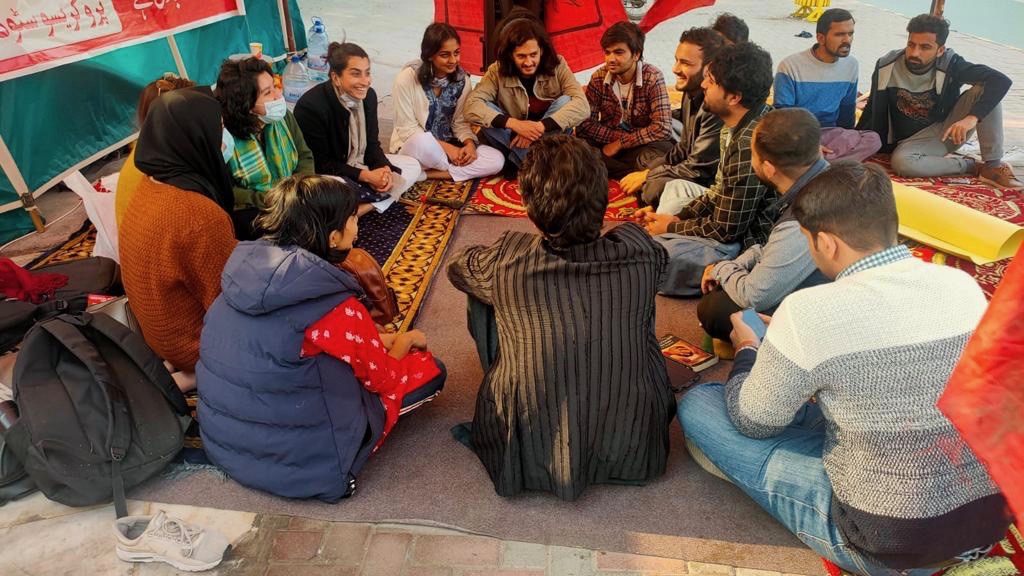
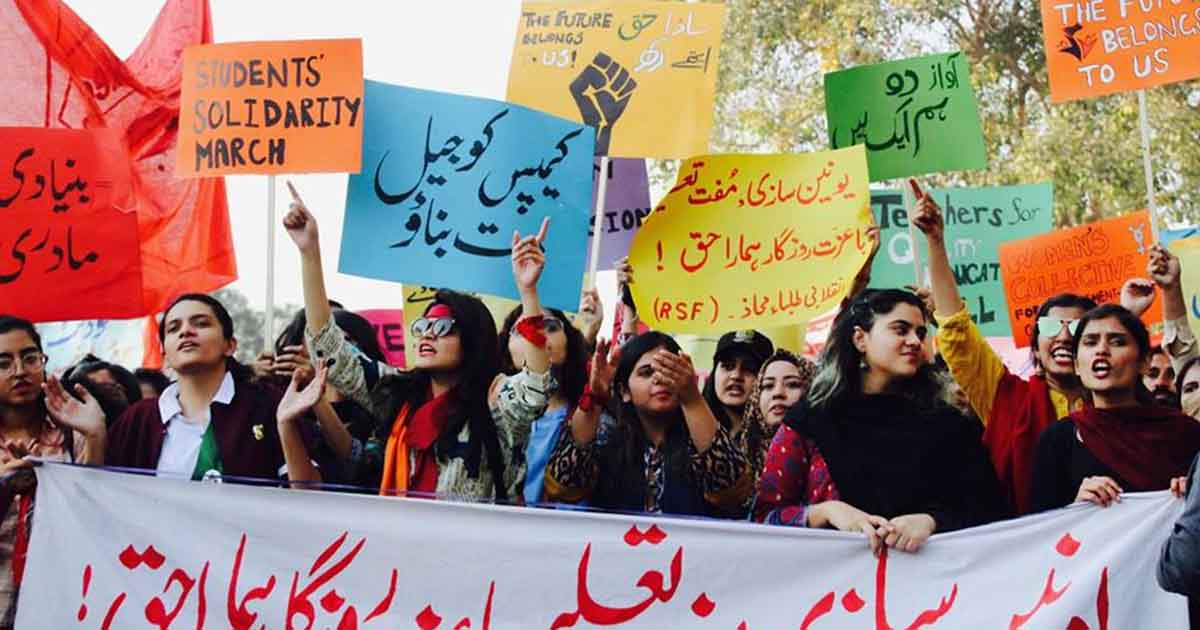
In examining the efforts of the National Students Federation (NSF) and the Pakistan Coalition for Education (PCE), it's evident that these organizations play vital roles in advocating for positive change within Pakistan's educational landscape.
The NSF, with its roots in the historical struggles against imperialism, stands as a formidable force striving for a just and equitable educational system. By uniting students on a national level, instilling political consciousness, and actively opposing the existing educational framework, the NSF aims to create a conducive environment for the growth and empowerment of the next generation. On the other hand, the Pakistan Coalition for Education (PCE) has been a driving force for educational reform for over sixteen years. Through a multifaceted approach that includes lobbying, social media campaigns, community involvement, and legal actions, PCE addresses critical issues such as public-private partnerships, girls' education, financing, and governance. Their "Fund the Future: Education Now" campaign exemplifies their commitment to improving domestic finance for education and creating a more inclusive and equitable educational system. Both organizations share a common goal of fostering positive changes in Pakistan's education sector. While the NSF focuses on the grassroots level, mobilizing students for a collective voice, the PCE operates on a broader scale, engaging with legislators, communities, and international platforms to bring about comprehensive reforms. In conclusion, the collaboration of student-driven movements like the NSF and advocacy organizations like the PCE reflects a commitment to ensuring that education becomes a transformative force in Pakistan. By addressing challenges, promoting equity, and pushing for necessary reforms, these organizations contribute significantly to creating a brighter and more equitable future for students across the country.


Image source:
Content :
https://www.pcepak.org 
https://pknsf.com/ 

Comments

  1. great! made me more aware regarding this issue

    ReplyDelete

Post a Comment

Feedback Form

Popular posts from this blog

Exclusive Interview: Representative of Human Rights Commission of Pakistan (HRCP)

  Human Rights Commission of Pakistan (HRCP) Established in 1986 and registered in 1987, the Human Rights Commission of Pakistan (HRCP) is the country’s apex independent human rights body. A non-political, not-for-profit organisation, HRCP is committed to realising the entire ambit of human rights—civil, political, economic, social, and cultural—for all citizens and persons present in the country. HRCP uses the framework provided by the fundamental freedoms guaranteed in the Constitution of Pakistan as well as international human rights instruments, to some of which Pakistan is a state party. (HRCP) Interview Transcript (The interview transcript is the exclusive property of the Administrator of NOW or NEVER  and the interview was conducted under their personal supervision. This attests to the Admin's profound passion and unwavering dedication to the subject matter.  It serves as a primary work , offering invaluable and compelling insights into the historical and con...

Exclusive Interview: Chief Librarian Punjab University| Dr. Muhammad Haroon Usmani

  This video encapsulates the perspectives of the  Chief Librarian from the most renowned Punjab University in Pakistan, and the largest library in the country.  The selection of the  Chief Librarian  for this interview was deliberate, considering his extensive experience, seniority, and significance in the field. The video is the exclusive property of the Administrator of  NOW or NEVER   and was meticulously filmed under their personal supervision. This attests to the Admin's profound passion and unwavering dedication to the subject matter.  It serves as a primary work , offering invaluable and compelling insights into the historical and contemporary landscape of student rights and student unions in Pakistan. The content further delves into the  Chief Librarian's personal reflections  on the topic, drawing from his own experiences and interactions with student unions over the years.

Negligence or Injustice

In contemporary society, the struggles faced by young people extend beyond the challenges of adolescence. Unfair treatment and pervasive stereotypes impact various facets of their lives, creating a systemic and deeply ingrained set of issues. This exploration delves into key concerns outlined for a more equitable approach toward the younger generations. Young individuals consistently grapple with the imposition of unequal standards in behavioral expectations. Actions considered acceptable for older individuals often become grounds for punishment when exhibited by the youth. Basic rules of etiquette, such as expressing disagreement, getting a tattoo, or staying up late, face unwarranted scrutiny in comparison to their older counterparts. Youth find themselves disproportionately targeted by the justice system, facing legal consequences for activities considered normal for adults. Seemingly mundane conflicts within educational institutions can escalate into criminal matters, thrusting ...